Port of Poti: Georgia's largest sea port and a gateway of the Middle Corridor
The Port of Poti is Georgia's largest sea port and the main Black Sea gateway for Middle Corridor cargo: about 80% of the country's container traffic passes through it. Using open sources, we break down the infrastructure, throughput, capacity and development plans of the Port of Poti — and what it means for delivery to Ukraine.
What the Port of Poti is
Poti Sea Port, on the eastern coast of the Black Sea, is operated by APM Terminals (the Maersk group). It is Georgia's largest sea port and a key European gateway for the trade of Georgia, Armenia and Azerbaijan, and a growing hub for Central Asia. This is where cargo arrives after the Caspian crossing to continue by sea to Ukraine and Europe.
Infrastructure and terminals of the Port of Poti
The Port of Poti is a universal complex — containers, liquids, dry bulk and ferries. Key facts (from open sources):
| Parameter | Value |
|---|---|
| Berths | 15 |
| Quay length | ~2,900 m |
| Quay cranes | 29 |
| Rail track in port | 22 km |
| Share of Georgia's containers | ~80% |
The Poti container terminal handles about 80% of all of Georgia's container traffic.
Throughput and capacity
In 2025 APM Terminals Poti handled a record ~636,000 TEU. By the end of 2026 a new harbour crane will raise container capacity to over 650,000 TEU and add about 500,000 tonnes of other cargo handling.
Development plans: the mega-port
Under the APM Terminals master plan, the fully built-out Port of Poti is designed for up to 50 million tonnes and 2 million TEU a year — the level of the largest Black Sea ports.
The Port of Poti in the Middle Corridor
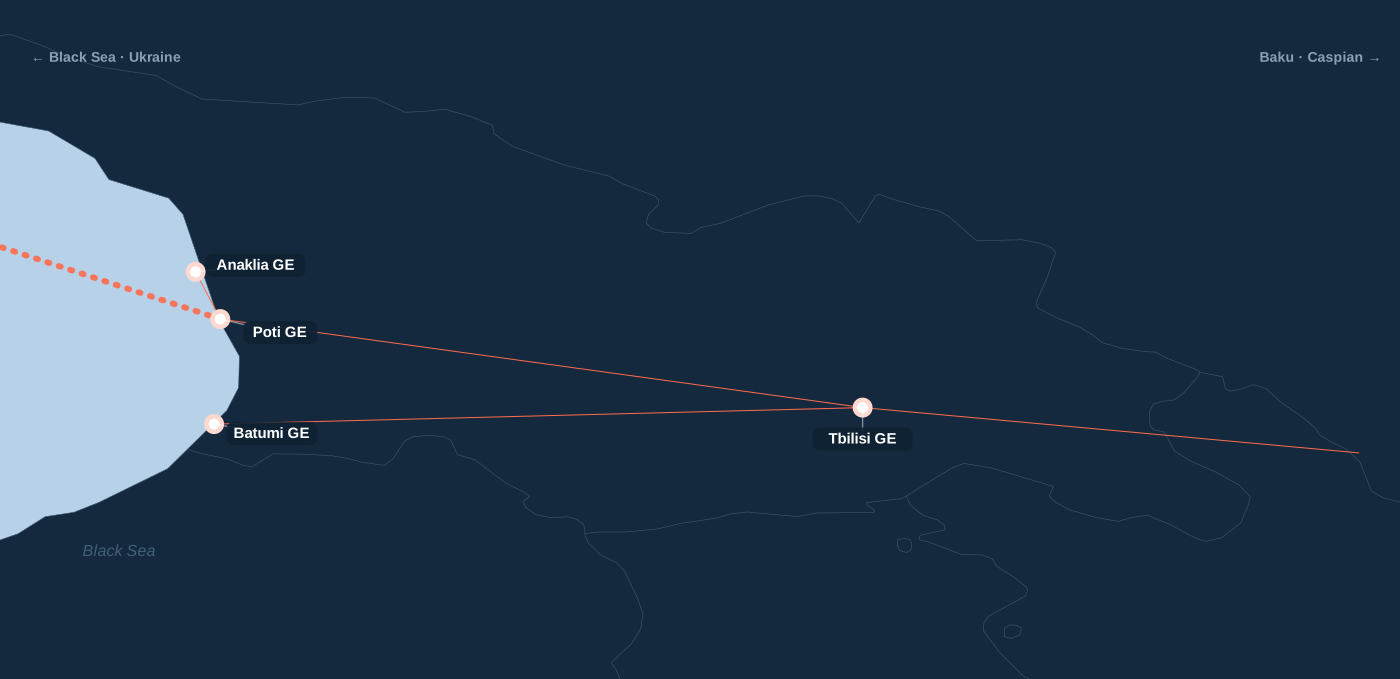
Poti is the western sea leg of the route: cargo from Asia comes across the Caspian (Aktau/Kuryk → Baku), then by rail through Azerbaijan and Georgia to Poti, and from there across the Black Sea to Ukraine (Odesa) and Europe. See The Caspian crossing and Middle Corridor — explained.
What it means for an importer in Ukraine
For a Ukrainian importer, the Port of Poti is the entry point for Asian cargo bypassing Russia and a convenient transshipment onto the Black Sea. We arrange delivery via the Port of Poti — transshipment, documents and onward shipping to Ukraine — end-to-end. On the sea leg itself, see Sea freight.
Summary
The Port of Poti is Georgia's largest and most developed sea port and a key node of the Middle Corridor. We arrange delivery and transshipment via Poti — send a request.
Get a delivery quote