FOB vs CIF (Incoterms 2020): the difference and which to choose
FOB and CIF are two sea delivery terms under Incoterms 2020 that are often confused. Both pass risk on board the vessel, but split the freight and insurance costs differently. We break down FOB vs CIF in plain words and the key cost-vs-risk nuance — with import to Ukraine in mind.
What FOB is
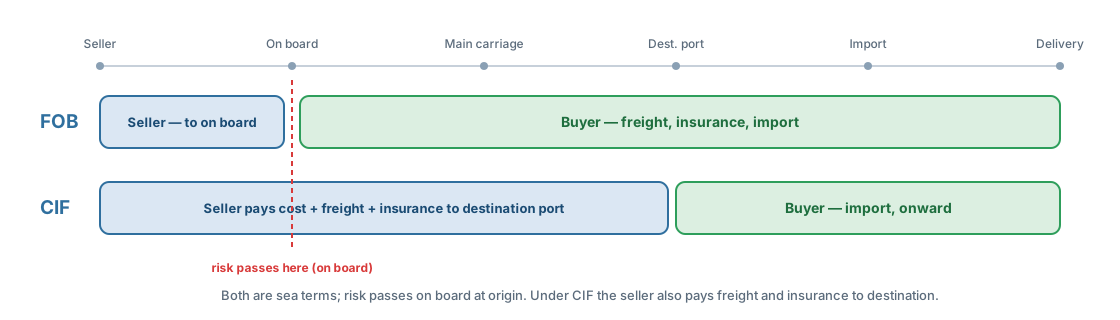
FOB (Free On Board) — the seller clears export and loads the goods on board at the port of shipment. From there the main freight, insurance and import are on the buyer. Risk passes once the goods are on board.
What CIF is
CIF (Cost, Insurance, Freight) — the seller also loads on board but additionally pays the freight and minimum insurance (ICC C) to the destination port. Import and delivery after the port are on the buyer.
Who is responsible for what
| Stage | FOB | CIF |
|---|---|---|
| Export clearance | seller | seller |
| Delivery on board | seller | seller |
| Main freight | buyer | seller |
| Insurance | buyer | seller (min ICC C) |
| Risk transfer | on board (origin) | on board (origin) |
| Import & delivery | buyer | buyer |
The key difference — freight and insurance
The only difference: under FOB the buyer arranges and pays freight and insurance; under CIF the seller does (to the destination port). So the CIF price is higher — carriage and insurance are already built in.
The key nuance: cost is not risk
The point people trip on: risk passes to the buyer on board at the port of shipment — under both FOB and CIF. So under CIF the seller pays for carriage to the destination, but the buyer bears the cargo in transit. That is why cargo insurance matters, and the minimum CIF cover (ICC C) is often not enough.
When to choose FOB or CIF
- FOB — when the buyer wants to control freight and insurance (often cheaper and more flexible).
- CIF — when the buyer prefers the seller to arrange carriage and insurance turnkey up to the port.
FOB and CIF for import to Ukraine
Many Ukrainian importers prefer FOB — you can pick your own forwarder, control the freight rate and arrange proper insurance. Under CIF the seller picks the carriage, and the minimum cover is often too thin. On the terms in general see Incoterms, and the door pair EXW vs FOB and DDP vs DAP.
Development prospects
Shipping paperwork is going digital: electronic contracts and documents, automatic cost and insurance calculation by delivery term. This makes comparing FOB and CIF and choosing the best option faster and clearer.
Summary
FOB = the buyer carries and insures from on board. CIF = the seller pays freight and insurance to the port, but the risk is still on the buyer from on board. ABU JORJIA will help pick the term and arrange delivery to Ukraine — send a request.
Get a delivery quote