EXW vs FOB (Incoterms 2020): the difference and which to choose
EXW and FOB are two Incoterms 2020 delivery terms with a very different split of duties. Under EXW almost everything is on the buyer; under FOB the seller takes on part. We break down EXW vs FOB in plain words and suggest what to choose for import to Ukraine.
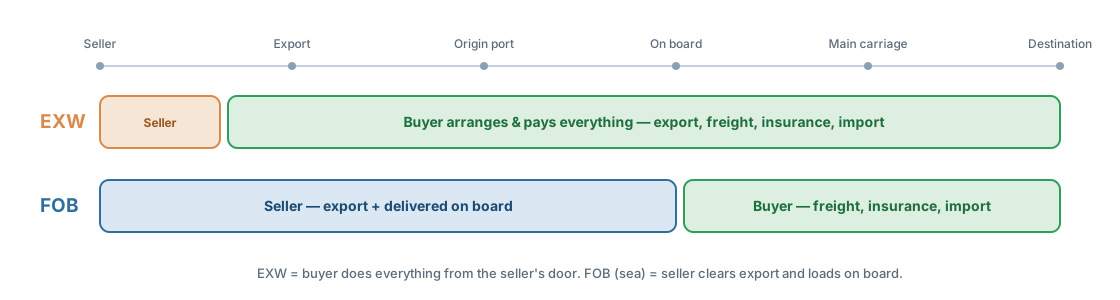
What EXW is
EXW (Ex Works) — the seller only makes the goods ready at its premises, and the buyer does everything else — export clearance, delivery to the port, loading, freight, insurance and import. It is the seller minimum obligation.
What FOB is
FOB (Free On Board) — for sea transport only: the seller clears export and loads the goods on board the vessel at the port of shipment. From there the main freight, insurance and import are on the buyer. Risk passes once the goods are on board.
Who is responsible for what
| Stage | EXW | FOB |
|---|---|---|
| Export clearance | buyer | seller |
| Delivery to port | buyer | seller |
| Loading on board | buyer | seller |
| Main freight | buyer | buyer |
| Insurance | buyer | buyer |
| Import & delivery | buyer | buyer |
The key difference
The difference is who brings the goods to the ship. Under EXW the buyer arranges export clearance, delivery to the port and loading in a foreign country — awkward and risky. Under FOB the seller takes that on, and the buyer steps in on board.
When to choose, and the container nuance
EXW suits the seller but burdens the buyer. FOB is more familiar and safer for the buyer. Note: for containers FCA is often recommended over FOB — risk passes when the goods are handed to the carrier at the terminal rather than “on board”, which better fits container logistics. On the terms in general see Incoterms explained, and on the duty-paid pair see DDP vs DAP.
EXW and FOB for import to Ukraine
For a Ukrainian importer EXW means you (through an agent) clear export and move the goods out of the seller country — hard without a local partner. FOB is easier: the seller delivers on board and you control freight, insurance and clearance in Ukraine. On insurance see cargo insurance.
Development prospects
Incoterms are updated about every 10 years, and paperwork is going digital: electronic contracts and documents, automatic cost calculation by delivery term. This simplifies choosing between EXW, FOB and FCA and makes estimates clearer.
Summary
EXW = the buyer does everything from the seller door. FOB = the seller delivers on board and the buyer carries on. For containers consider FCA. ABU JORJIA will help pick the term and arrange delivery to Ukraine — send a request.
Get a delivery quote