Liner, Feeder and NVOCC: who is who in container shipping
Several “players” take part in container shipping and are often confused: the liner, the feeder and the NVOCC. Understanding who is who helps you read the bill of lading and see who is responsible for your cargo. We break down the roles of the liner, the feeder and the NVOCC in plain words — and how they work on the route to Ukraine.
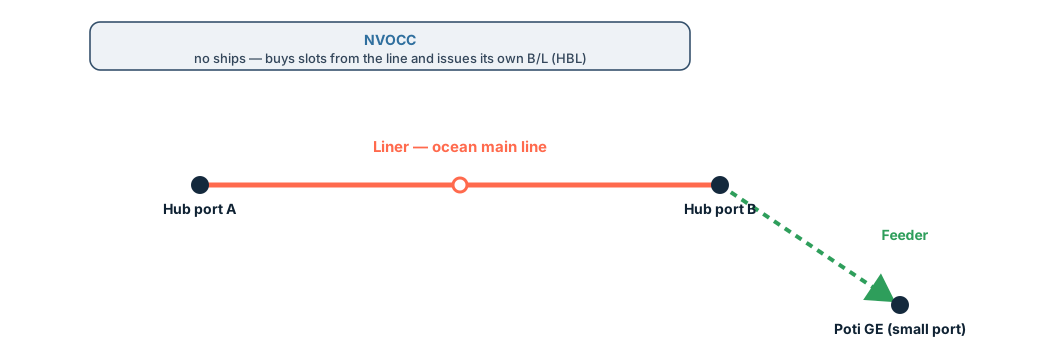
Liner (shipping line)
A liner (shipping line) is a company that owns ships and containers and runs on a fixed schedule between the major ports of the world. It is the liners (Maersk, MSC, CMA CGM, etc. — see top shipping lines) that carry cargo across the oceans on main-line routes.
Feeder
A feeder is a smaller vessel that carries containers between small ports and hub ports, where the cargo is transferred to large liner vessels. A feeder owns ships but usually not containers and “feeds” cargo to the main lines. It is feeders that deliver containers to Poti and Batumi from Black Sea hubs (such as Istanbul), because large ocean vessels do not call at small ports.
NVOCC
An NVOCC (Non-Vessel Operating Common Carrier) is a “carrier without ships”: it owns no ships but buys space (slots) from the lines and issues customers its own bill of lading (a house B/L, HBL — see shipping documents). An NVOCC often owns containers and handles booking and consolidation.
Comparison table
| Feature | Liner | Feeder | NVOCC |
|---|---|---|---|
| Owns ships | Yes | Yes | No |
| Owns containers | Yes | No | Yes |
| Operates vessels | Yes | Yes | No |
| Service type | Ocean (main line) | Short-sea / regional | Booking & consolidation |
| Issues Bill of Lading | Yes | Sometimes | Yes |
| Connects | Major ports | Small ports to hubs | Shippers to carriers |
How it works on the route to Ukraine
For delivery to Ukraine the chain is usually: cargo travels by liner on the ocean main line to a Black Sea hub, from there by feeder to the ports of Poti or Batumi, while an NVOCC or forwarder books the slots, consolidates groupage and issues the customer a house bill of lading. All of this is part of multimodal transport.
Where the forwarder fits in
The forwarder (acting as an NVOCC) is your single point of contact: it picks the line and feeder, buys the slots, issues the bill of lading and moves the cargo to the warehouse. You do not have to deal with each carrier separately.
Development prospects
The market is consolidating into line alliances, the role of digital NVOCC platforms with online booking and tracking is growing, and feeder networks are developing around new hubs. For the Middle Corridor this means more regular feeder calls at the Georgian ports and more transparent booking.
Summary
A liner carries across the oceans, a feeder links small ports to hubs, and an NVOCC makes shipping possible without owning ships. As a forwarder/NVOCC, ABU JORJIA takes on booking, consolidation and documents for delivery to Ukraine — send a request.
Get a delivery quote